
When a bunion becomes painful, affects your mobility, or makes it difficult to wear shoes, surgery often becomes part of the conversation. But with so many types of bunion surgery available today, it can be hard to know which option is right for you. Some procedures simply reduce the bump, while others fully correct the underlying misalignment. And then there’s Lapiplasty®, a newer 3D bunion correction that has changed the way surgeons approach this condition.
At Fall Creek Foot & Ankle, our goal is to help patients understand their bunion surgery options, how they differ, and what each procedure can realistically offer. Below, we compare traditional techniques with Lapiplasty® to help you make a confident, informed decision.
Why Surgery May Be Needed for Bunions
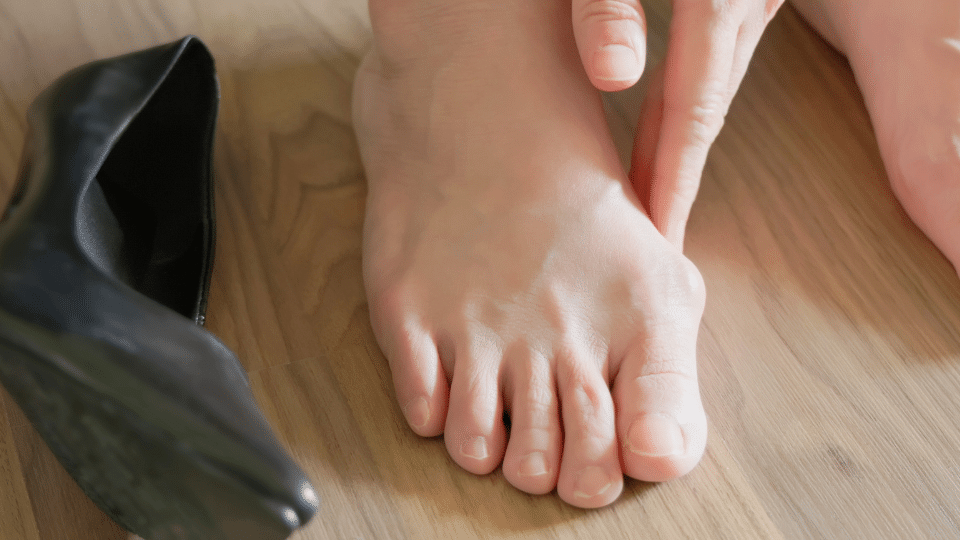
A bunion isn’t just a bump, it’s a progressive joint deformity that worsens over time as the bone drifts, rotates, and becomes increasingly unstable. While padding, wider shoes, and orthotics can help manage discomfort, they cannot correct the underlying misalignment. That’s why surgery becomes an option when pain interferes with daily activities or when the deformity begins to affect mobility.
If you want to understand why bunions progress and the role genetics often play in their development, you can learn more in our post: Are Bunions Genetic? Understanding the Inherited Risk Factors.
The Main Types of Bunion Surgery
Not all bunions are treated the same way. Here are the most common types of bunion operations performed today.
Osteotomy (Bone-Cutting Procedures)
These procedures, such as Chevron, Scarf, or Akin osteotomies, involve cutting and shifting the metatarsal bone to realign the toe.
Best for: mild to moderate bunions
Pros: predictable results, widely performed
Cons: only corrects the bunion in 1–2 planes; does not address joint instability or rotation
Exostectomy (Bump Removal Only)
This technique removes the bony bump without changing the alignment of the toe.
Best for: very mild bunions or cosmetic concerns.
Pros: less invasive and helpful for reducing shoe irritation in select cases.
Cons: deformity often returns because the underlying structure remains unchanged.
Lapidus Procedure (Joint Fusion)
This option fuses the unstable joint at the base of the first metatarsal to correct the deformity at its origin.
Best for: severe bunions, hypermobility, or recurrent bunions
Pros: long-term correction and stability
Cons: longer recovery and reduced joint motion
Minimally Invasive Bunion Surgery (MIS)
Using small incisions and specialized tools, MIS techniques realign the bone with less soft-tissue disruption.
Best for: select patients with mild to moderate bunions
Pros: less postoperative pain, smaller scars
Cons: may not fully correct rotational deformities
What Is Lapiplasty® 3D Bunion Correction™?
Lapiplasty® is an advanced surgical approach that corrects bunions in all three dimensions, not just the visible bump. While traditional procedures mainly shift the bone sideways, a bunion also involves rotation, elevation, and instability at the joint that anchors the metatarsal bone.
Lapiplasty® addresses these issues by:
- Repositioning the metatarsal into its natural 3D alignment
- Stabilizing the unstable joint at the base of the bone
- Securing the correction with titanium plates for long-term stability
Recovery varies, but many patients can begin walking in a protective boot within days and return to supportive shoes in 6–8 weeks.
Lapiplasty® Bunion Surgery Pros and Cons
Because many patients ask “Should I get a Lapiplasty?”, understanding its advantages and limitations is important.
Pros: provides true 3D correction, stabilizes the joint to reduce recurrence, allows earlier weight-bearing, and offers predictable long-term alignment.
Cons: more complex than standard “cut-and-shift” techniques, involves permanent hardware, and may be unnecessary for very mild bunions.
This combination of innovation and stability is why so many people search for “Lapiplasty compared to other bunion treatments” when exploring their surgical options.
Lapiplasty® vs Traditional Bunion Surgery: What’s the Difference?
This is why many patients research “Lapiplasty compared to other bunion treatments,” since these differences can meaningfully affect long-term outcomes.
Is Lapiplasty® Right for You?
You may be a good candidate for Lapiplasty® if you have:
- Moderate to severe bunion deformity
- Joint instability or hypermobility
- A history of a bunion returning after surgery
- An active lifestyle requiring durable correction
However, patients with mild bunions often do well with simpler osteotomies. A podiatric evaluation, including imaging and a gait analysis, is essential in determining the best option.
If you’re interested in learning more about how Lapiplasty® works, we’ve created a full guide that breaks down the procedure in simple, patient-friendly terms. You can read it here: What Is Lapiplasty® Bunion Surgery?.
Selecting the Procedure That’s Right for You
There is no single “best” bunion surgery, only the best procedure for your foot. Whether your condition calls for a traditional osteotomy, a minimally invasive approach, or advanced Lapiplasty® bunion surgery, Fall Creek Foot & Ankle will guide you toward the safest and most effective choice for long-term foot health.
If you’re exploring bunion surgery options and want expert guidance, we’re here to help.
Schedule an appointment today to discover which procedure is right for your needs.