
Swelling in the feet and ankles is a common experience during pregnancy, especially as the body adapts to support a growing baby. While this change can be uncomfortable, swollen feet during pregnancy are often a normal response to increased fluid retention, circulation changes, and added pressure on the lower extremities.
Understanding what causes swelling, how to relieve it safely, and when it may signal a concern can help expectant mothers feel more confident and comfortable throughout pregnancy.
Why Swollen Feet Are Common During Pregnancy
Pregnancy brings significant physical and hormonal changes that affect circulation and fluid balance. As the body produces more blood and fluid to support fetal development, extra fluid can accumulate in the tissues, particularly in the feet and https://www.mayoclinic.org/healthy-lifestyle/pregnancy-week-by-week/expert-answers/swelling-during-pregnancy/faq-20058467ankles, where gravity plays a role.
Many patients notice pregnancy woman swollen feet becoming more prominent later in the day or during warmer weather. Hormonal changes also cause blood vessels to relax, slowing circulation and allowing fluid to pool in the lower extremities.
What Causes Swelling in Feet and Ankles During Pregnancy
Swelling can result from several overlapping factors, often becoming more noticeable as pregnancy progresses.
Increased Fluid Retention
The body naturally retains more fluid during pregnancy. This extra fluid helps support circulation and fetal growth but can settle in the feet and ankles.
Hormonal Changes and Circulation
Hormones that relax blood vessels can reduce the efficiency of blood returning from the legs to the heart, contributing to swelling in feet and ankles during pregnancy.
Pressure from the Growing Uterus
As the uterus expands, it can place pressure on pelvic veins, slowing blood flow from the legs and increasing fluid buildup in the feet.
Activity, Heat, and Prolonged Standing
Standing or sitting for long periods, increased activity, and warm temperatures can all make swelling more noticeable, particularly toward the end of the day.
When Swollen Feet Are Considered Normal
In most cases, pregnancy-related swelling is not a cause for concern. Normal swelling typically:
- Develops gradually
- Affects both feet and ankles
- Improves with rest or elevation
- Is worse in the evening and better in the morning
For additional guidance on everyday swelling, this guide on managing foot swelling during pregnancy offers helpful tips and reassurance.
When Swollen Feet During Pregnancy May Be a Concern
Although swelling is often expected, certain symptoms should not be ignored. Swelling may require medical evaluation if it is sudden, severe, or affects only one side, such as one foot swollen pregnant.
Other signs to watch include redness, warmth, or significant discomfort. In some cases, feet swollen and painful while pregnant may indicate inflammation, infection, or circulation issues that need professional assessment.
Sudden or severe swelling—especially when it involves the face, hands, or is accompanied by headaches, visual changes, dizziness, or elevated blood pressure—may be a sign of preeclampsia. These symptoms require immediate evaluation by an obstetric provider or emergency care.
Itchy or Painful Swelling: What It May Mean
Some patients experience itching along with swelling, which can occur as the skin stretches or fluid pressure increases. Mild irritation is common, but persistent symptoms such as itchy swollen feet when pregnant should be monitored closely.
When itching is combined with ongoing swelling, as in swollen and itchy feet during pregnancy, it’s important not to dismiss the symptoms, especially if they worsen or interfere with daily comfort.
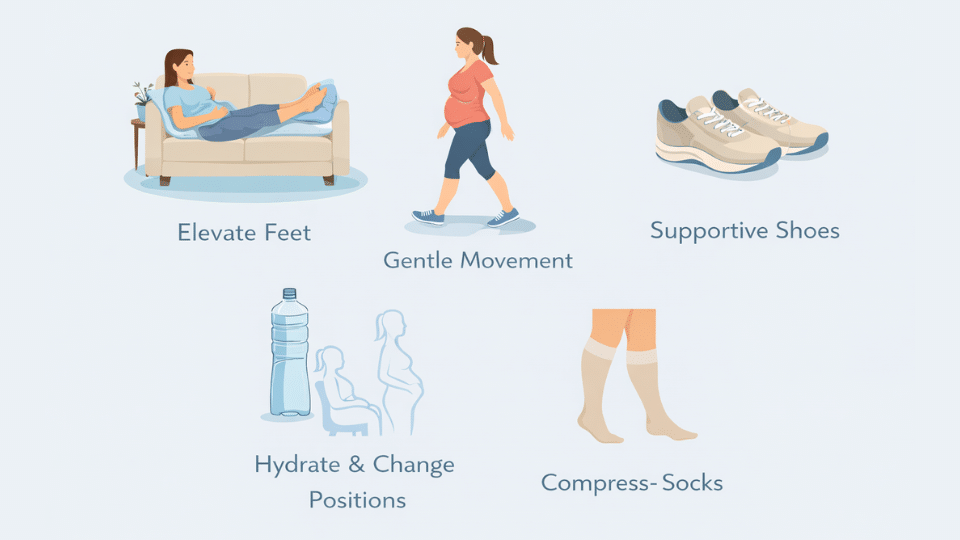
How to Prevent Swelling Feet During Pregnancy
While swelling cannot always be eliminated, several conservative steps may help reduce discomfort and support circulation.
Elevating the Feet
Raising the feet above heart level helps fluid move back toward the upper body and can reduce swelling after long periods of activity.
Gentle Movement and Activity
Light walking and pregnancy-approved exercises encourage circulation and prevent fluid from pooling in the lower extremities.
Wearing Supportive Footwear
Shoes with proper arch support and a wide toe box can help reduce strain and improve overall comfort.
Staying Hydrated and Changing Positions
Adequate hydration supports healthy fluid balance, while avoiding prolonged sitting or standing helps reduce swelling.
Compression Socks (When Appropriate)
Some pregnant patients benefit from compression socks to support circulation, though these should be used with professional guidance. For additional insight into related discomfort, this resource on foot pain during pregnancy may be helpful.
When to See a Foot and Ankle Specialist
While swelling in the feet and ankles is common during pregnancy, certain symptoms may benefit from professional evaluation, including:
- Swelling that does not improve with rest or elevation
- Increasing pain or difficulty walking
- Swelling that appears suddenly or continues to worsen
- Redness, warmth, or skin changes
- Swelling affecting one foot more than the other
Swelling that affects only one foot or leg, particularly when accompanied by redness, warmth, or tenderness, may indicate a circulation concern and should be evaluated promptly. A foot and ankle specialist can safely evaluate pregnancy-related swelling, rule out underlying concerns, and help guide appropriate care.
Find Answers for Pregnancy-Related Foot Swelling
Swelling during pregnancy is often a normal part of the body’s adaptation, but persistent or uncomfortable symptoms deserve attention. Swollen feet during pregnancy may improve with simple care, but professional evaluation can help rule out underlying concerns and provide reassurance.
A foot and ankle specialist can work alongside your prenatal care provider to evaluate pregnancy-related swelling, rule out musculoskeletal or circulation concerns, and recommend supportive care.
At Fall Creek Foot & Ankle, patients throughout the Humble and greater Houston, Texas area receive individualized care focused on identifying the cause of foot and ankle discomfort and guiding appropriate next steps. If swelling is affecting your comfort or mobility, you don’t have to wait, book an appointment today to receive expert guidance tailored to your needs.