
When toenails are damaged by fungus, injury, or other nail problems, it is natural to look for a way to make them look and feel normal again. Many people think of salon-style acrylic nails first, since they are familiar and easy to find. But the toes move differently than the fingers, and the products used on them matter. If you are weighing your options, here is a clear look at how KeryFlex nail restoration differs from acrylic, and why flexibility is such an important part of the conversation.
Toenails can become discolored, thickened, split, ridged, or misshapen from fungal infection, injury or repeated trauma, and nail defects. Feeling self-conscious about them is completely understandable, and wanting a natural-looking nail is a reasonable goal. The important question is how that nail is created, and what it does to the nail underneath.
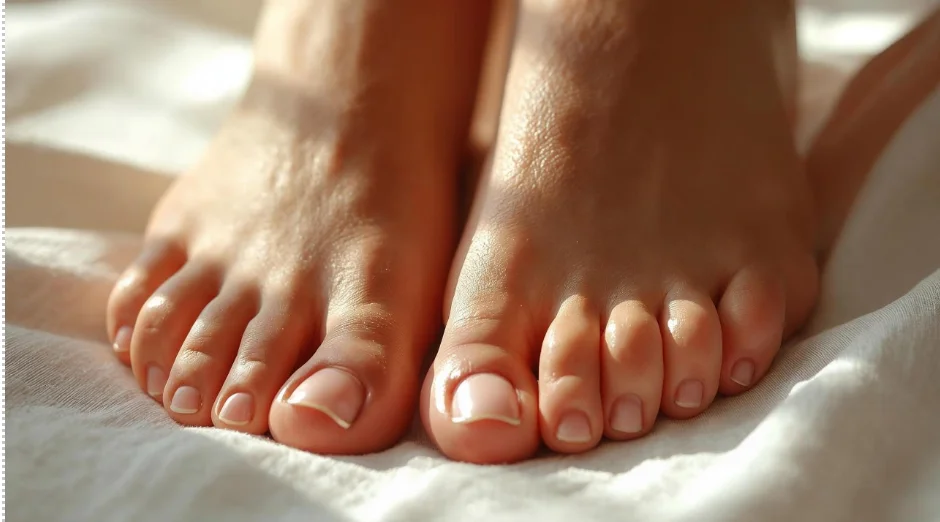
According to the manufacturer, acrylic nails are rigid and do not bend with the natural movement of the toes, which can cause micro-trauma to the nail bed when they are applied to the toenails. The same source notes that acrylic nails are applied using strong acids that irritate the nail bed and damage the existing nail. With every step, the toes flex, the foot meets the shoe, and a rigid nail has nowhere to give.
KeryFlex is a painless, in-office application that restores the appearance of the natural nail, in which a certified foot care provider remodels a nail affected by fungus, defects, or trauma. According to the manufacturer’s FAQ, the key differences are:
Even with those ingredients, KeryFlex is not a cure for fungal nails. The manufacturer states plainly that it is an aesthetic procedure designed to improve the appearance of toenails damaged by fungus and other nail disorders (FAQ). If a fungal infection is present, it still needs to be evaluated and addressed separately. The manufacturer notes that a topical antifungal may be applied around the cuticle area, and that a KeryFlex nail may be applied immediately after laser therapy but should not be lasered through.
KeryFlex is not for everyone. According to the manufacturer, it should not be used on individuals with peripheral vascular disease, arterial insufficiency, peripheral neuropathy, suspicious pigmented lesions on the nail, or ingrown toenails, and it should be avoided in patients who are pregnant, nursing, or known to be sensitive or allergic to any of its ingredients (FAQ). In rare cases, allergies have been reported. Because KeryFlex does not bind to skin, at least 15 percent of the natural nail is recommended. A careful evaluation is the best way to find out whether it is a good fit for you.
You should be able to feel good about your feet, and the right choice starts with an honest evaluation of what is going on with your nails. Fall Creek Foot & Ankle is here for Humble and Kingwood, TX. Schedule an evaluation with a podiatrist near you today and find out whether KeryFlex may be right for you.
This article is intended for general informational purposes and isn’t a substitute for a personalized evaluation.