
Toe deformities such as hammer toe and claw toe are common conditions that can affect comfort, mobility, and even the types of shoes you’re able to wear. While these conditions are sometimes used interchangeably, they are not the same. Each involves different joints in the toe and may develop for different reasons.
Understanding the difference between claw toe vs hammer toe can help you recognize early signs, avoid worsening symptoms, and seek the right care before the condition becomes more difficult to treat.
What Is a Hammer Toe?
A hammer toe is a deformity that typically affects the second, third, or fourth toe, causing it to bend downward at the middle joint and take on a hammer-like shape. This condition often develops due to an imbalance in the muscles and tendons that control toe movement, and over time, the joint may become stiff or fixed, especially with continued pressure from footwear.
Patients with hammer toe may notice:
- Pain when wearing shoes
- Corns or calluses on the top of the toe
- Redness or irritation from friction
- Difficulty straightening the toe
If you’d like a deeper explanation of how this condition develops, you can learn more about what a hammer toe is.
What Is a Claw Toe?
Claw toe is a deformity that affects the smaller toes, causing them to bend upward at the base and downward at the middle and end joints, creating a claw-like shape. This condition often involves multiple joints and is commonly associated with muscle imbalance or underlying nerve-related issues, which can influence how the toes function over time.
Patients with claw toe may notice:
- Pain or pressure when wearing shoes
- Calluses on the top or tip of the toe
- Toe stiffness or reduced flexibility
- Increased discomfort as the deformity progresses
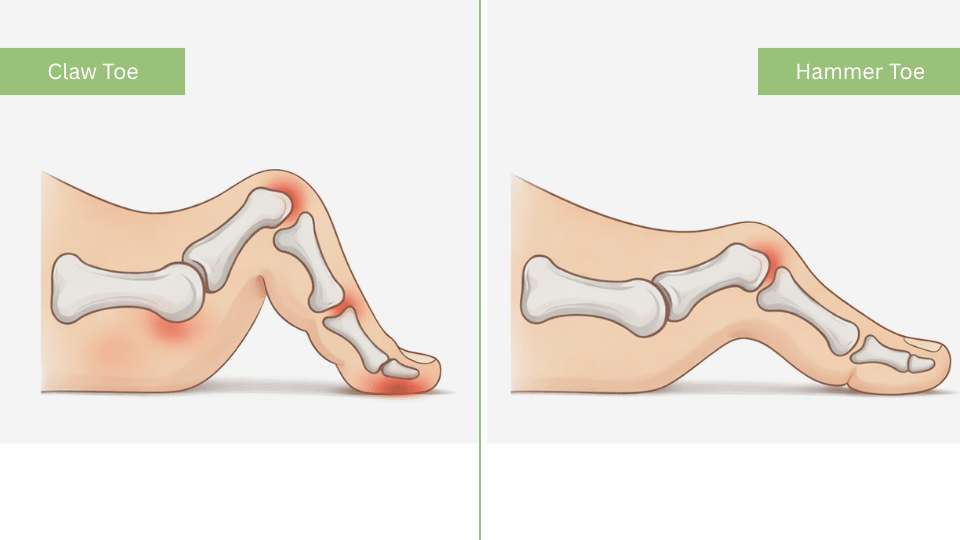
Claw Toe vs Hammer Toe: Key Differences
Although these conditions may appear similar, they involve different joints and may develop for different reasons. When comparing claw toes vs hammer toes, understanding these distinctions can help you recognize changes early and better understand what may be contributing to your symptoms.
| Feature | Hammer Toe | Claw Toe |
| Joints Involved | Middle joint only | Multiple joints (base, middle, and end) |
| Toe Position | Bent downward at the middle joint | Upward at the base, downward at other joints |
| Appearance | “Hammer-like” bend | “Claw-like” curled shape |
| Common Causes | Footwear pressure, muscle imbalance | Nerve or muscle imbalance, underlying conditions |
| Progression | Often gradual, may start flexible | Can become rigid more quickly depending on cause |
| Associated Concerns | Corns on top of toe, shoe irritation | Pressure on tips of toes, calluses, balance issues |
What Causes Hammertoes and Claw Toes?
Several contributing factors can lead to the development of claw and hammer toe deformities.
Footwear and pressure
Tight or narrow shoes, especially those that crowd the toes, can force the joints into unnatural positions over time.
Muscle and tendon imbalance
When the muscles that control the toes are not working in balance, certain joints can become overpowered, leading to deformity.
Foot structure
Conditions such as high arches or flat feet can increase pressure on the toes and contribute to abnormal positioning.
Underlying conditions
In some cases, particularly with claw toe, nerve-related conditions or systemic issues may play a role in how the deformity develops.
Do These Toe Deformities Get Worse Over Time?
Yes, both hammer toe and claw toe can worsen if not addressed.
In the early stages, the toe may still be flexible and easier to manage. Over time, however, the joints can become stiff and fixed in position. As this happens, pressure on the toe increases, often leading to:
- Persistent pain
- Thickened skin, corns, or calluses
- Increased difficulty finding comfortable footwear
Addressing symptoms early can help reduce progression and improve overall comfort.
Specialist-Guided Treatment Options for Hammer Toe and Claw Toe
Treatment for hammer toe vs claw toe depends on the severity of the deformity and whether the joints are still flexible. A foot and ankle specialist will evaluate your condition and recommend care based on your specific needs.
Conservative Treatment (Early-Stage Management)
For mild or flexible deformities, treatment may include:
- Wearing shoes with a wider toe box
- Protective padding to reduce friction
- Custom orthotics to improve alignment
- Targeted exercises to support mobility
These approaches are designed to relieve symptoms and slow progression rather than reverse the deformity. Your provider may recommend personalized care based on your condition, including options similar to those outlined in hammer toe treatment approaches.
Advanced Treatment Options for Rigid Deformities
If the deformity becomes rigid or symptoms do not improve, a specialist may recommend advanced treatment options, including:
- Procedures to rebalance tendons
- Joint correction to improve alignment
- Techniques focused on relieving pressure and restoring function
In some cases, toe deformities may also be associated with other structural concerns. You can learn more about how hammer toe can be related to bunions.
Why Proper Diagnosis Matters
Although these conditions may look similar, treating hammer toe vs claw toe the same way may not lead to the best results. Each deformity has different causes and may require a different approach.
A proper evaluation helps identify what’s contributing to the condition and allows for a treatment plan that is tailored to your needs.
When Should You See a Foot and Ankle Specialist?
It may be time to seek evaluation if you notice:
- Toes beginning to bend or curl unnaturally
- Ongoing pain when walking or wearing shoes
- Recurrent corns, calluses, or irritation
- Difficulty finding shoes that feel comfortable
Understanding Your Next Steps
Toe deformities like claw toe and hammer toe may begin subtly but can gradually affect your comfort and daily activities. Recognizing the early signs and understanding the differences between these conditions can help you take the right steps before symptoms progress.
If you’re noticing changes in your toes or experiencing discomfort, Fall Creek Foot & Ankle provides expert care in Humble and Kingwood to help you understand what’s causing your symptoms and how to manage them effectively. Book an appointment today to get a personalized evaluation and the right care for your needs.