
Changes in toenail color, thickness, or texture can be concerning, especially when it’s unclear what’s causing them. Many patients struggle to determine whether they’re dealing with an injury or an infection, since both conditions can appear similar at first glance.
Understanding the difference between toenail trauma vs fungus is important for recognizing early signs and knowing when professional care may be needed. While these conditions may share some symptoms, they develop differently and require different approaches to treatment.
What Is Toenail Trauma?
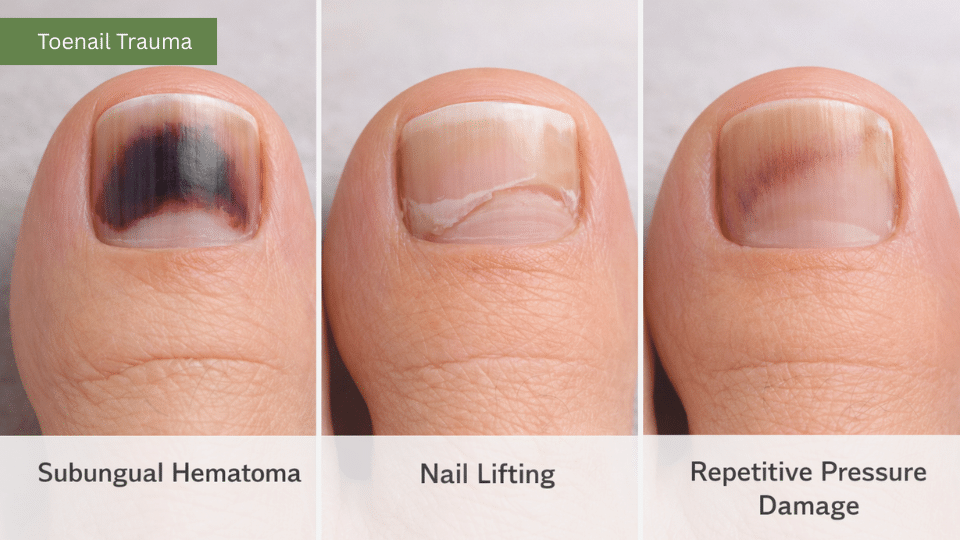
Toenail trauma occurs when the nail is damaged due to direct injury or repeated pressure over time. This can happen suddenly, such as dropping an object on the toe, or gradually from activities like running or wearing tight shoes.
Patients with toenail trauma may notice:
- Dark discoloration (red, purple, or black)
- Pain or tenderness, especially early on
- Blood trapped under the nail
- Nail lifting or loosening
- Changes typically affecting only one nail
What Is Toenail Fungus?
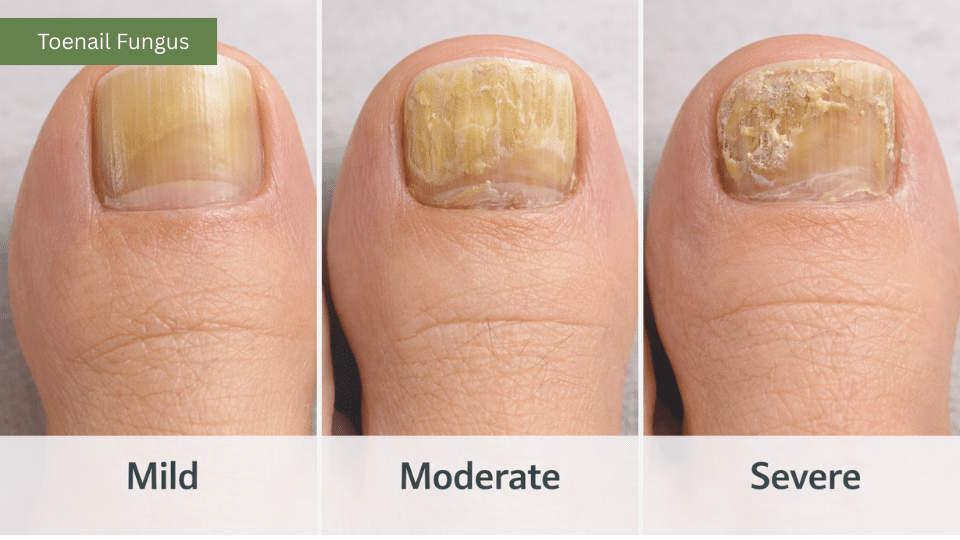
Toenail fungus, also known as onychomycosis, is a fungal infection that develops when fungi grow in or under the nail. It often begins subtly and becomes more noticeable over time.
Patients with toenail fungus may notice:
- Yellow, white, or brown discoloration
- Thickened or brittle nails
- Crumbly or uneven edges
- Nail distortion as it grows
- Possible odor
- Involvement of multiple nails
Patients with fungal nail infections often have questions about daily care and hygiene, including whether it’s safe to maintain routines like pedicures with nail fungus.
Toenail Trauma vs Fungus: Key Differences
Although both conditions can cause visible nail changes, their patterns and progression are different. When comparing bruised toenail vs fungus or even toe nail trauma vs fungus, paying attention to timing, color, and the number of nails involved can provide helpful clues.
| Feature | Toenail Trauma | Toenail Fungus |
| Onset | Sudden | Gradual |
| Cause | Injury or pressure | Fungal infection |
| Color | Dark (red, purple, black) | Yellow, white, brown |
| Pain | Common early | Often minimal initially |
| Number of nails | Usually one | Often multiple |
| Progression | Improves as nail grows | Worsens without treatment |
What Causes Nail Trauma and Fungal Infections?
Both conditions develop for different reasons, although they can sometimes overlap.
Toenail trauma is often caused by direct injury, repetitive pressure from physical activity, or footwear that compresses the toes. Over time, even minor repeated stress can damage the nail.
Toenail fungus develops in warm, moist environments where fungi thrive. It may begin after small cracks or injuries in the nail allow organisms to enter. When comparing nail trauma vs fungus, the underlying cause is one of the most important distinctions.
Can Toenail Trauma Turn Into a Fungal Infection?
In some cases, the answer is yes. A damaged nail can become more vulnerable to infection, creating an entry point for fungi to grow.
This overlap is one reason patients often question whether they are dealing with toenail trauma or fungus. A nail that initially changes due to injury may later develop signs of infection if not properly monitored.
Treatment Options Based on the Underlying Cause
Treatment depends on identifying the correct cause, which is why evaluation by a specialist is often recommended. A proper diagnosis helps ensure that care is targeted appropriately, whether the issue is related to injury, infection, or a combination of both.
Treatment for Toenail Trauma
- Monitoring as the nail grows out
- Reducing pressure on the affected area
- Guidance on proper footwear and nail care
Treatment for Toenail Fungus
- Topical or oral antifungal medications
- Professional nail care or debridement
Depending on the severity, a podiatrist may recommend care similar to toenail fungus treatment options to help manage the infection effectively.
Why Proper Diagnosis Matters
Because symptoms can overlap, misidentifying the condition may delay appropriate care. Treating an injured toenail or fungus or even a fingernail bruise or fungus incorrectly can lead to ongoing discomfort or progression of the problem. A proper evaluation helps determine the underlying cause and ensures that treatment is targeted and effective.
For additional context, some nail conditions can resemble each other, which is why comparing issues like toenail fungus vs ingrown toenail can also be helpful when evaluating symptoms.
When Should You See a Foot and Ankle Specialist?
You should consider seeking professional evaluation if you notice:
- Nail discoloration that does not improve
- Thickening or changes in nail shape
- Pain, swelling, or drainage
- Nail changes affecting more than one toe
- Uncertainty about whether the issue is trauma or infection
If you are experiencing any of these symptoms, a professional evaluation can help clarify the underlying cause and guide appropriate next steps.
Understanding Your Next Steps
Toenail changes can be easy to overlook at first, but they often provide important clues about what’s happening beneath the surface. Knowing how to distinguish between trauma and fungal infection can help you respond early and avoid unnecessary complications.
If you’re noticing ongoing changes in your toenails or are unsure about the cause, Fall Creek Foot & Ankle provides expert care in Humble and Kingwood to help you evaluate your symptoms and determine the most appropriate treatment approach. Book an appointment today to get a personalized evaluation and the right care for your needs.