
Foot pain in the ball of the foot can be easy to dismiss at first. However, recognizing the 10 signs you may have Morton’s neuroma can help you identify when discomfort is more than simple soreness. Morton’s neuroma is a condition involving irritation and thickening of a nerve, most commonly located between the third and fourth toes.
Over time, pressure and compression can cause inflammation around the nerve, leading to increasing pain and sensory changes. Understanding how symptoms develop can help you determine when evaluation may be necessary.
What Is Morton’s Neuroma?
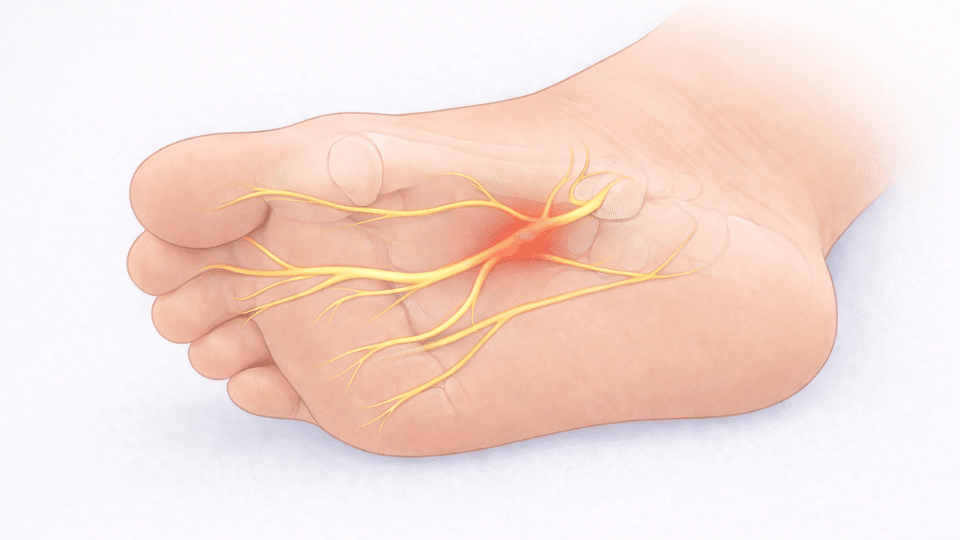
Morton’s neuroma is not a tumor, but rather a thickening of tissue surrounding a nerve in the forefoot. This irritation often develops due to repetitive pressure, tight footwear, high heels, or abnormal foot mechanics. The condition typically affects one nerve, creating localized discomfort in the ball of the foot.
A neuroma in foot tissue develops gradually as the nerve becomes compressed. Without intervention, irritation may worsen over time.
10 Signs You May Have Morton’s Neuroma
The following signs reflect common Morton’s neuroma symptoms that occur as the nerve becomes increasingly irritated:
1. Burning Pain in the Ball of the Foot
A sharp or burning sensation is often felt between the third and fourth toes.
2. Tingling in the Toes
Some individuals experience a pins-and-needles feeling radiating into the adjacent toes.
3. Numbness in the Affected Toes
Reduced sensation may develop as the nerve becomes compressed.
4. Feeling Like You’re Standing on a Pebble
Many patients describe the sensation as if a small pebble or fold in the sock is under the foot.
5. Pain That Worsens in Tight or Narrow Shoes
Shoes with a narrow toe box or high heels increase pressure on the forefoot and can aggravate symptoms.
6. Relief When Shoes Are Removed
Symptoms often improve temporarily when footwear is removed and the toes are gently stretched.
7. Pain That Increases with Activity
Walking, running, or standing for extended periods can intensify discomfort.
8. Sharp or Shooting Pain
Sudden stabbing sensations may occur during weight-bearing.
9. A Thickened Sensation Between the Toes
Although not always visible, the area may feel fuller or swollen internally.
10. Symptoms That Come and Go, Then Gradually Worsen
Early discomfort may be intermittent, but untreated irritation often becomes more persistent.
Morton’s Neuroma Diagnosis
Proper evaluation is important to determine whether your discomfort aligns with the typical symptoms of Morton’s neuroma. A podiatrist may begin with a clinical assessment that includes discussing your symptoms, activity level, and footwear habits. Because forefoot pain can stem from several conditions, careful evaluation helps narrow down the source.
During the exam, gentle pressure may be applied to the forefoot to assess tenderness between the toes. In some cases, imaging such as ultrasound or MRI may be considered if symptoms are persistent or unclear. The purpose of evaluation is to confirm the underlying cause of pain and guide appropriate next steps.
Are There Different Types of Neuromas in the Feet?
There are various types of neuromas in feet, depending on which nerve is affected. While Morton’s neuroma most commonly develops between the third and fourth toes, irritation can occur in other nerve branches within the forefoot as well.
Different types of neuroma in foot structures may cause slightly varied symptoms depending on location. Some may produce more localized pain, while others may cause tingling or numbness that radiates into adjacent toes. In most cases, however, the underlying mechanism remains similar, ongoing nerve compression and inflammation due to pressure, footwear, or biomechanical stress.
Although Morton’s neuroma is the most frequently diagnosed form, distinguishing between nerve-related pain and other forefoot conditions requires proper evaluation. Identifying the specific location of irritation helps guide the most appropriate treatment approach.
When to See a Foot and Ankle Specialist
Although mild discomfort may improve with shoe changes, professional evaluation is recommended if:
- Pain becomes persistent or progressively worse
- Numbness increases
- Walking becomes uncomfortable
- Symptoms interfere with daily activity
- Conservative measures fail to provide relief
Early assessment helps prevent worsening nerve irritation. If you are experiencing ongoing forefoot pain, you can explore available neuroma treatment options to better understand how this condition is evaluated and managed.
Protecting Your Long-Term Foot Health
Recognizing the 10 signs you may have Morton’s neuroma can help you seek care before symptoms significantly impact your mobility. Addressing nerve irritation early often leads to more effective and less invasive treatment.
At Fall Creek Foot & Ankle, patients throughout the Humble and greater Houston, Texas area receive individualized care tailored to their specific condition. If forefoot pain, tingling, or numbness is affecting your comfort, book your appointment today to schedule an appointment and receive professional evaluation.
Early care supports long-term foot health and helps you stay active with confidence.